

Ask the chat what to do next on a deal
A rep with sixty open deals does not have a knowledge problem, they have a prioritisation problem. The data is all there; what is scarce is the thirty seconds of clear thinking about this deal that would tell you the one thing to do about it. That thinking is what the chat’s coaching layer does, and this play is the two minutes it takes to use it.What to expect
- Timing. 2 to 4 minutes per deal.
- Prerequisite. The opportunity is AI-active. An account plan on the account makes the answer materially better but is not required.
- Outcome. One named next move, grounded in where the deal actually stands, and the first step of it already taken.
Step-by-step
- Ask for the move, not the status. This is the whole play. “What’s the status of the Capital One deal” returns a summary you mostly already knew. “What’s up with the Capital One deal and how do I move it forward” returns the summary and the single highest-priority action. Same cost, completely different answer. Reps who learn one habit from this page should learn this one.
- Read the top line before the detail. The answer opens with where the deal actually stands: the stage, the amount, how far past its close date it is, who the champion is, who the economic buyer is. This is the context the move is built on, and if it is wrong, the move will be too.
- Read the “most important next move”. The chat names one action, grounded in established sales methodology (MEDDPICC, Challenger, JOLT and others) rather than in a template. “Re-engage the economic buyer to confirm vendor onboarding and reset an impossible close date” is a different quality of answer from “follow up with the customer,” and it is arrived at by reasoning about what is actually missing from the deal.
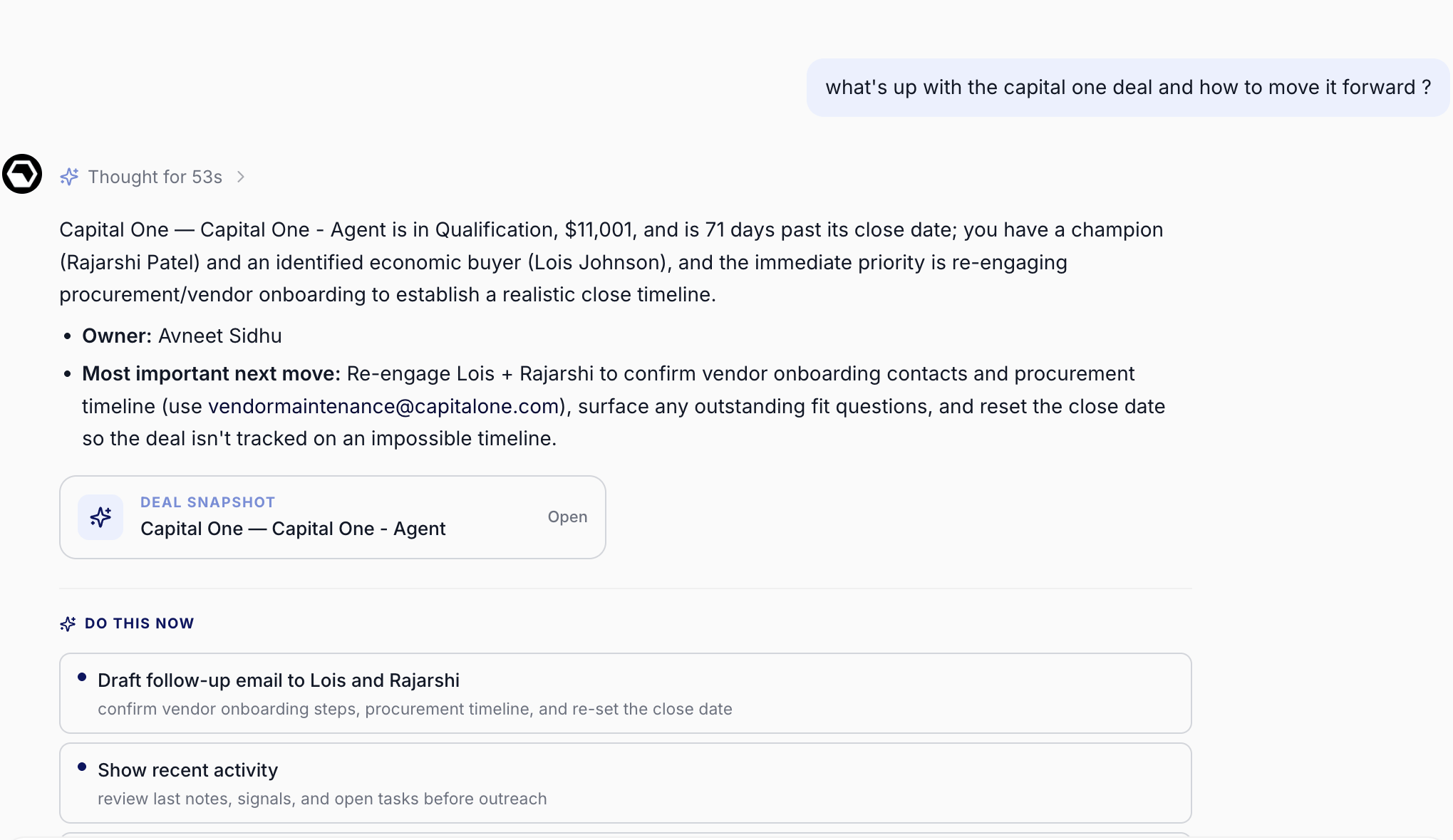
The chat leading with the most important next move, with the deal snapshot and one-click next steps beneath it.
- Glance at the deal snapshot. Where an account plan exists, its highlights fold in beside the answer: the top challenge, the recommended pitch angle, the expected business impact. This is the difference between an email that references the deal and one that references the argument.
- Take the move from the buttons underneath. The answer carries a “Do this now” row: draft the follow-up, log the task, open the deal. Click the one that matches the move. The draft opens already holding the context, so you are not re-explaining the deal to the thing that just explained it to you.
- Disagree when you know better. You were on the last call and the chat was not. If the move is wrong for this relationship, say so in the thread and steer it; you keep the loaded context and lose only the suggestion.
Patterns that work
One thread per deal, not one thread per question. Your plan caps conversations per month and messages per conversation, so the cheap habit is to keep a deal’s thread going rather than opening a new chat each time you think about it. The history popover brings yesterday’s thread back. Use it on the deals you are avoiding. The coaching layer is most valuable on the deal you keep scrolling past, the one that is stuck for reasons you have not made yourself articulate. Asking the chat forces the articulation, and it usually names the thing you already suspected. Ask before the meeting, not after. Two minutes of this before a call is worth twenty minutes of prep afterwards, because the move it names is usually the thing the meeting should be about. Panel questions for scanning, prose questions for deciding. “Show me my overdue deals” gets you a ranked panel with risk flags, which is the right shape for triage. “How do I move this one forward” gets you a coached answer, which is the right shape for action. Use the first to find the deal and the second to work it.Related
- Home - the chat surface this play runs on.
- Opportunities - the deal the move lands on.
- Account detail - the account plan whose highlights sharpen the answer.
- Draft Email - where a “draft the follow-up” button takes you.
- Plans and Billing - the chat allowance behind the one-thread-per-deal habit.
- Build your daily focus list - the wider morning routine this sits inside.
- Catch up on a stalled account - the deeper play when the answer is “this has been stuck for a while.”