

Prep for a discovery call
A discovery call is locked in 24 to 48 hours from now. This is not the day-of, fifteen-minute brief; this is the deeper prep that decides whether you walk in with a real hypothesis or a polite agenda. The goal of this play is to land on: one pain hypothesis you can defend with evidence from the account, two questions that actually test it, and two attendees you can address by name with a reason they personally care. The day-of brief still happens; this play is what makes that brief useful.What to expect
- Timing. Roughly 30 to 45 minutes, spread across one or two sittings.
- Prerequisite. The meeting is on the connected calendar and at least one attendee has been mapped to a Salesforce contact on the account.
- Outcome. A 3-question call outline saved as a Note on the account, with a working pain hypothesis and a named angle for each key attendee.
Step-by-step
- Open the account and skim Overview for orientation. Account detail opens to Overview by default. Read the industry, the revenue band, the owner, and the linked opportunities. If you’ve never been here before, this is your two-minute orientation.
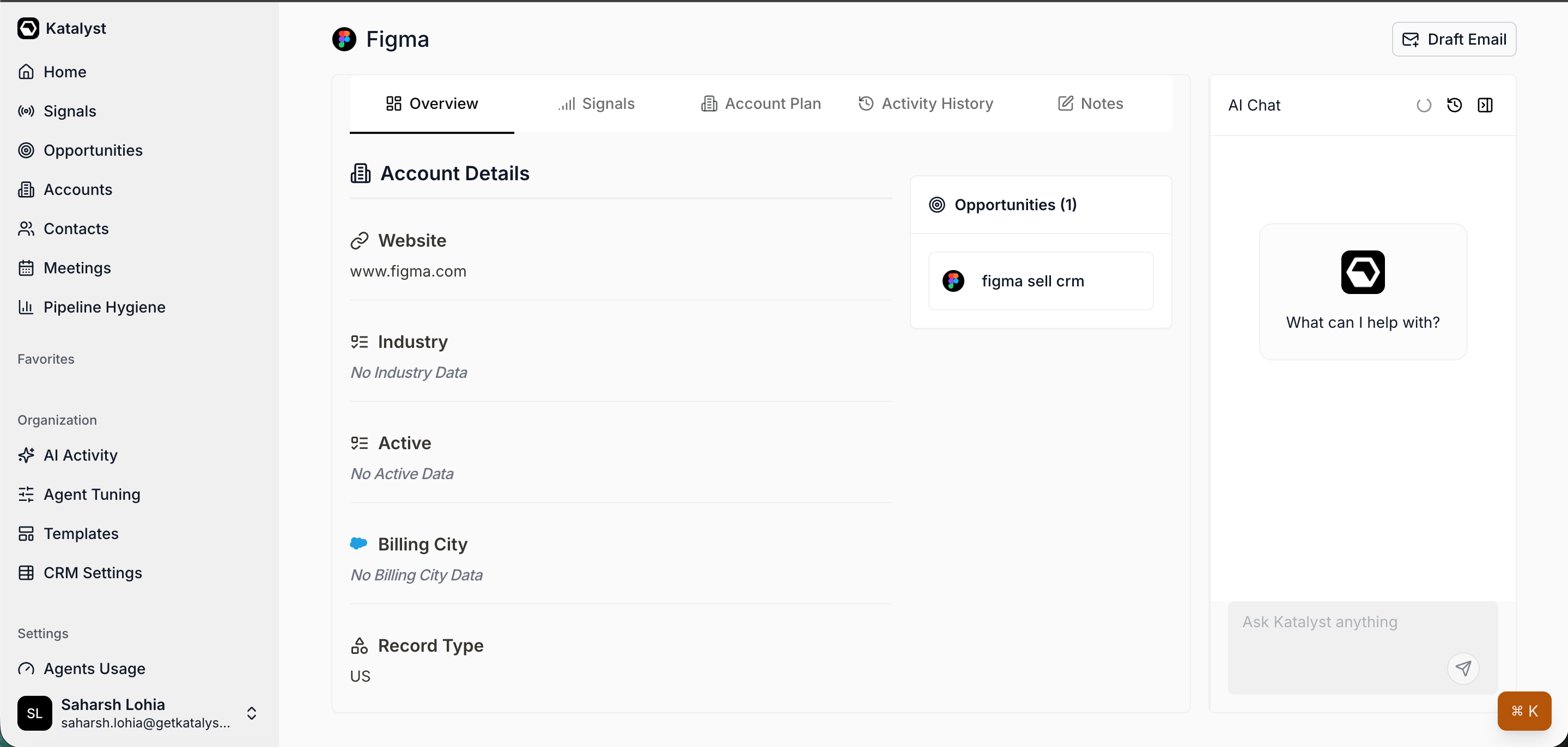
Account detail Overview anchors the three-column layout you'll prep against.
- Open Activity History and read the last 30 to 60 days. Switch to the Activity History sub-tab. This is the AI-action audit on the account: every email AI drafted, every field update, every post-meeting write-back. You’ll see what’s actually happened on the deal recently, including anything that ran while someone else was covering. Set the date range to the last month.
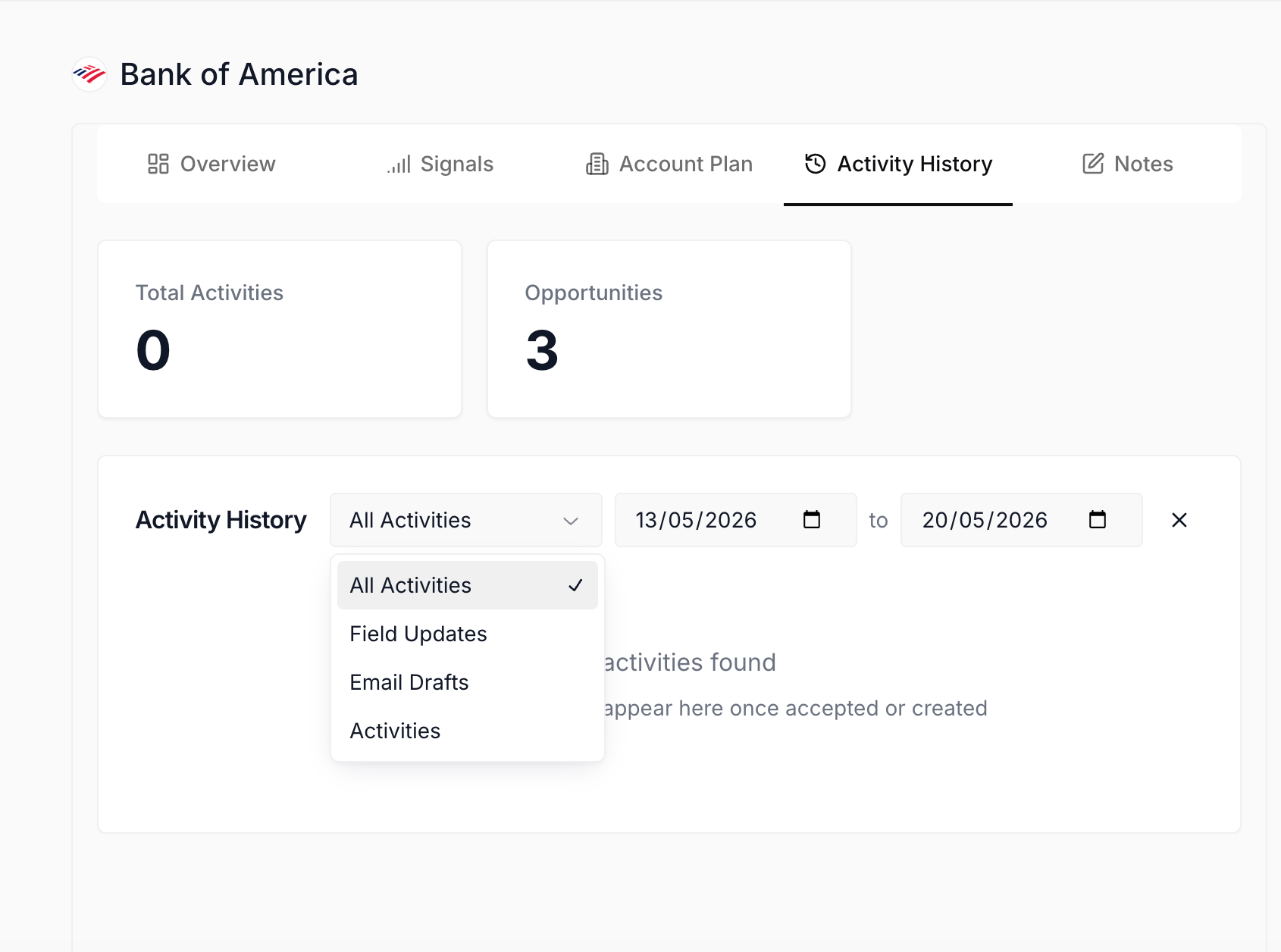
Activity History sub-tab listing every AI action on the account in the chosen window.
- Ask Per-record AI Chat for the pain read. The chat panel is scoped to this account and already has the Account Plan, Signals, Activity History, and Key People in context. Type the one question that gets you to a hypothesis: “Based on everything you have on this account, what’s the most likely pain we can speak to on a discovery call, and what’s the evidence?” Read the answer carefully; this is the spine of your call plan.
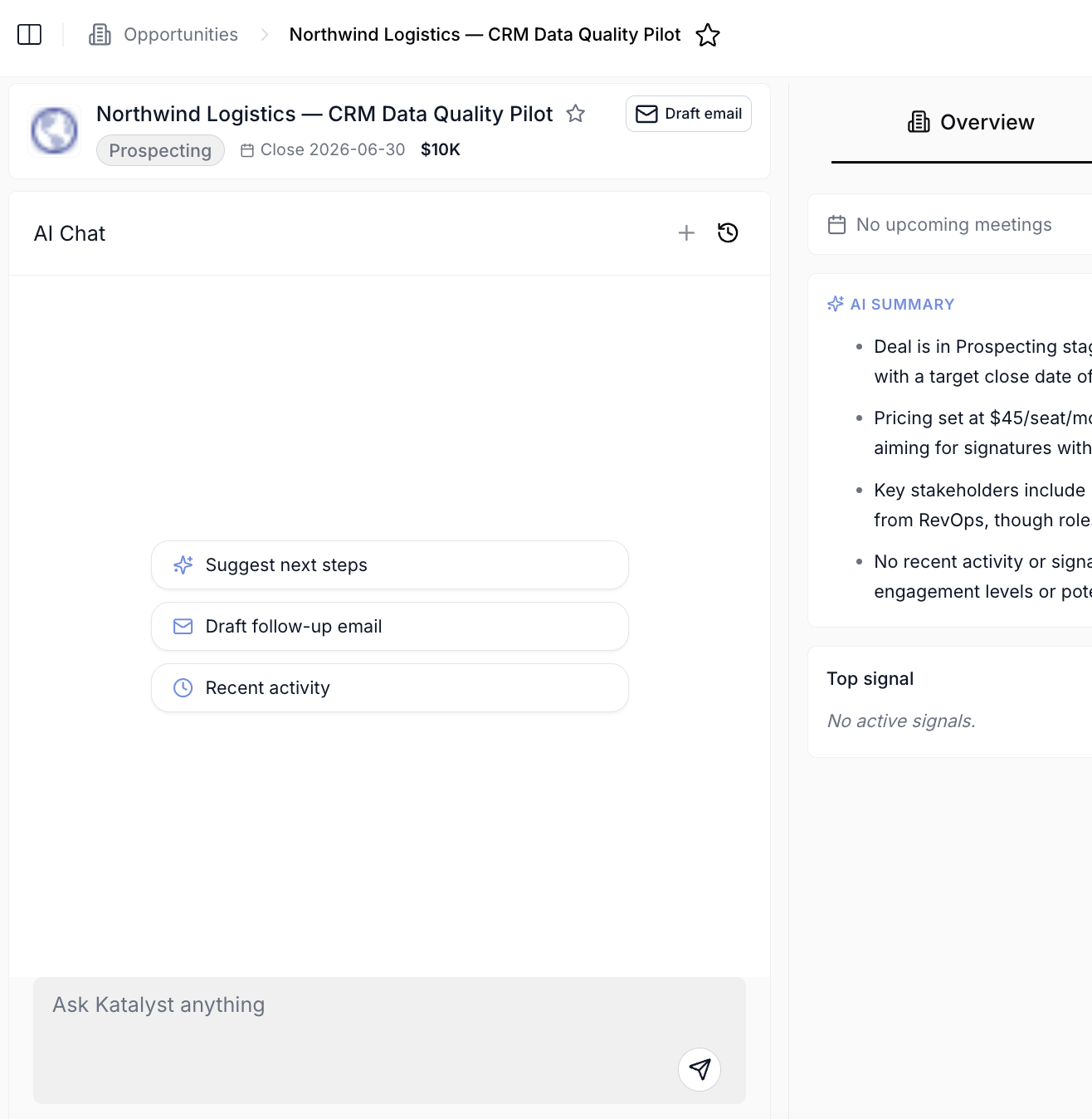
Per-record AI Chat panel scoped to a single account, opportunity, contact, or meeting.
- Drill into each attendee’s Contact Detail. Find the attendees on the Key People grouping or the linked Contacts table, then open each one’s detail page. Read the AI Summary at the top, glance at the Research tab if it’s populated, and note one thing per person you can speak to: a recent move, a topic they engage with publicly, a deal they sit on with one of your other accounts.
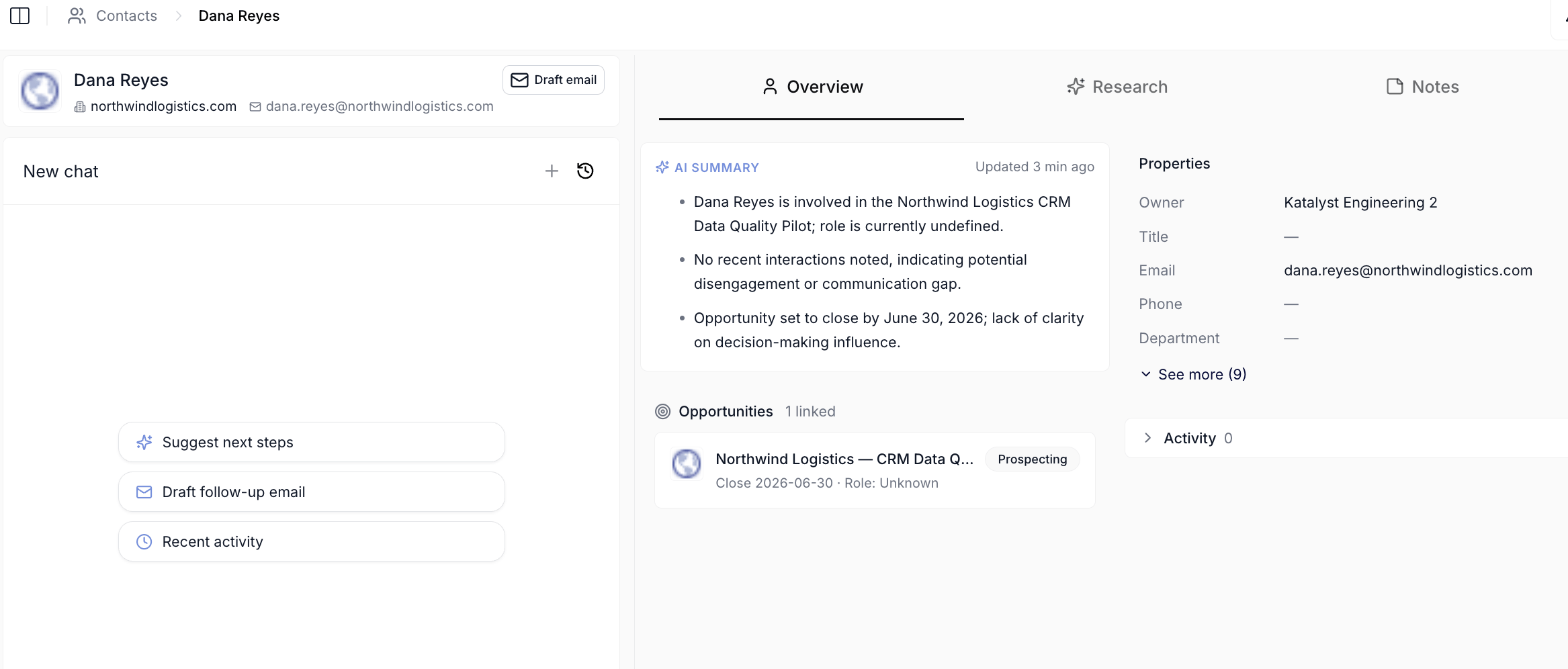
Contact Detail with AI Summary, linked opportunities, and activity tied to the contact.
- Draft a 3-question outline as a Note on the account. Back on the account, open the Notes sub-tab and start a new note titled “Discovery prep, [date].” Write the pain hypothesis at the top, then the three questions that test it. Underneath, list the two attendees you’ll address by name and the line you’ll use for each. The note auto-saves per keystroke and is team-shared so anyone joining the call from your side sees the same plan.
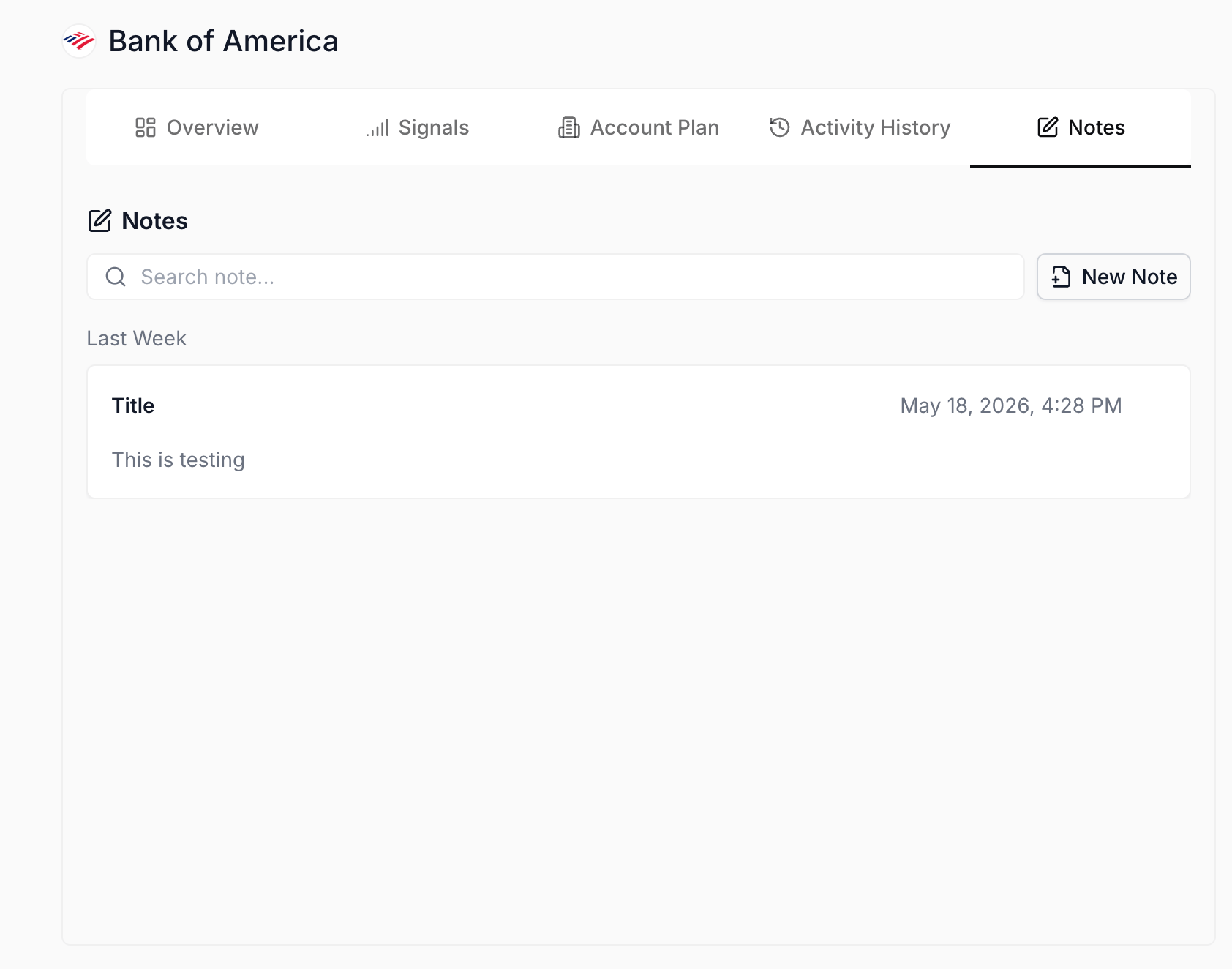
Notes sub-tab on an account with the in-place editor and auto-save.
- Day-of, open the meeting and read the Pre-meeting brief. When the call is an hour or two out, open the meeting from your calendar and read the AI-written Pre-meeting brief. It picks up the deal stage, the last touch, and any signal that fired since you wrote your outline. This is the moment to confirm nothing’s moved since you prepped; if it has, refine your hypothesis in the chat in five minutes flat. The Prep for a customer meeting play is the canonical day-of flow.
Variations
If the attendee list is still tentative when you start prep, run steps 1 through 3 against the account, then come back to steps 4 and 5 once the calendar invite is firm; the chat answer in step 3 doesn’t depend on knowing the exact attendees. If you’re prepping for a re-discovery call on a stalled deal rather than a first discovery, lead with the Catch up on a stalled account play first; the activity-and-signals gap-read there gives you a sharper hypothesis than starting from a clean Overview.Related
- Prep for a customer meeting - the day-of, fifteen-minute version of this prep.
- Research a new account - the play to run first if this is also a brand-new account.
- Build a stakeholder map - the play that turns the attendee list into a usable map.
- Log a call right after the conversation - the post-call companion that captures what you learned on the call.
- Recap after a customer meeting - the recorded-meeting follow-through play; the close-the-loop bookend to this prep.
- Notes - the canonical home for the call-prep notes you write during this play.
- Meetings - the canonical home for the meeting workspace this play prepares you for.
- Account detail - the workspace this play centers on.